

The Federal Hemp Ban, Explained: What It Means for Treadwell Farms and Our Products


By Jammie Treadwell, CEO & Co-Founder, Treadwell Farms
A federal hemp ban signed into law last November is poised to change what Treadwell Farms can legally sell, and I want you to hear about it directly from me instead of finding out when a product disappears from our shelves.
I'm not a lawyer or a lobbyist. I'm a Florida farmer who has spent years building products my family believes in, for customers who have come to rely on them. Since Florida created its hemp program it has held us to higher standards than federal law, and we’ve always held ourselves to even stricter standards than either set of rules dictated. Now, a new set of federal rules, signed into law in November 2025, would make it nearly impossible for us to keep making full-spectrum products with the naturally occurring cannabinoids our customers have come to rely on, because of regulatory language that would essentially put us out of business.
This also isn't a Florida story only. Treadwell Farms participates in a federal hemp program that lets us ship products to customers outside Florida, process credit card payments, and access things like crop insurance and USDA support. That federal participation is exactly why this law reaches customers everywhere we ship, not just the people who walk into our store in Umatilla.
What Is the Federal Hemp Ban, and What's Actually Changing?
For years, if a hemp product stayed under 0.3% delta-9 THC by dry weight, it counted as legal hemp under federal law. The new law replaces this with a total THC standard that adds delta-9 THC and THCA together, and it caps every finished hemp product at 0.4 milligrams of total THC per container.
That per-container cap is the detail this whole situation hinges on, and it's counterintuitive enough that I think it deserves its own explanation. Picture a bottle of 30 gummies, each one holding a small, low amount of THC. While each single gummy is within the approved range, the combined THC across all 30 gummies in that container exceeds the 0.4 milligrams almost immediately. To stay compliant, a company in our position might have to shrink a bottle from 30 gummies down to 5 or 10, which raises the cost per dose for the customer without changing a single thing about the product itself.

The hemp reclassification timeline has already shifted once. Originally, this rule was set to apply to every cannabinoid, natural and synthetic, starting November 12, 2026. Congress has since passed a short extension for naturally occurring cannabinoids (the kind found in Treadwell Farms products) pushing our deadline to December 11, 2026. Synthetic cannabinoids (like Delta-8, HHC, and THC-O) don't get that extra month.
The law required the FDA and DEA to issue guidance on things like what counts as a child-safe container, what labeling should say, and what qualifies as "intoxicating," within 30 to 60 days of the law being signed. That guidance still hasn't come. I don't know yet whether our current containers or labels will meet whatever standard eventually lands, and neither does anyone else in this industry.
Florida already calculates total THC the same way this new federal standard does, adding delta-9 THC and THCA together and multiplying by 0.877. Florida also restricts sales to customers 21+ and requires child-safe containers and third-party lab testing. The part of this new rule that's actually new for us is that 0.4-milligram per-container number.
Who the Hemp Ban Actually Affects
"Is CBD getting banned?" It's a question I hear more and more often, and people are surprised to learn how complicated the answer is—and who will be impacted.
Sleep support is the number one reason people buy from Treadwell Farms. By my own estimate, more than half of our customers use our products as an alternative to something else. Some are working with a doctor or pharmacist to wean off Ambien, worried about the side effects and long-term liver strain that accompany regular use. Others tell me they're trying to avoid reaching for Tylenol PM every night for the same reason. I've talked with customers reducing pain medication too, some concerned about liver damage from long-term use, others wary of opioid dependency after surgery. That last one is personal for my own family. I watched someone I love develop a dependency that started with pain medication after a routine procedure, and it changed how I think about what people reach for and why.

A smaller group of our customers has a diagnosed condition. I worry about customers with cancer, Parkinson's disease, and ALS the most; they tell me they've found relief with our products they haven't found anywhere else. One customer with Parkinson's came into my office and cried at the thought of losing access to our Relief CBDA tincture, which happens to be our largest bottle size and also the product our customers with the most complex health situations tend to rely on. Because it's such a large container, it's effectively impossible to bring under the 0.4-milligram cap no matter how little THC each dose contains.
While traveling abroad years ago, I noticed CBD oil used to help manage "sundowning" in Alzheimer's patients. I witnessed sundowners symptoms with my own grandfather, and recent research backs up what I observed: CBD may help support calm and easier transitions into sleep during sundowning, which benefits the caregiver as much as the patient. We've seen a rising number of customers coming to us for exactly this reason.
I'm not offering these scenarios as medical advice; we consistently tell customers to talk with their doctor or pharmacist before making changes to how they manage a health condition. But the human reality behind these numbers gets lost in the policy language, and I wanted it said plainly.
I also hear from customers on fixed or retirement incomes who ask me honestly whether they should spend their savings stocking up before the deadline hits, and whether they'd be considered criminals for having hemp products in their homes. I don't have a good answer for them right now. That uncertainty is its own part of this story.
Beyond individual health situations, this law arrives at an odd moment. A Medicare pilot program currently covers CBD products for some beneficiaries, meaning the federal government is actively expanding access to these products through one program while this rule closes the door through another. Seniors and veterans, many of whom fall into both categories at once, are the ones most likely to feel that contradiction firsthand.
What This Means for Our Products
I want to be honest about what this could potentially mean for the specific products many of you buy from us.
Our Relief Extract (CBDA+CBD) is the product I worry about most, for the reasons I described above. It's our largest bottle, which makes the per-container math almost impossible to solve, and it's the product our customers with the most complex health needs depend on.

Under the rule as currently written, our Sleep CBD Gummies and Relief CBD Gummies (both the 1:1 and 2:1 ratios) would not be allowed to continue as currently formulated. There's an irony here as Sleep Gummies currently comply with a current federal Medicare pilot program that covers CBD products for eligible beneficiaries. This rule would ban them. It's the right hand not talking to the left.
Our Focus CBG Gummy is impacted as well, simply because the bottle carries more THC than the per-container cap would allow.
Rapid Relief Cream may be the one exception. Based on a preliminary look at our lab results, it might not need to change. I want to be careful here and call that a possibility, not a settled fact, because we haven't confirmed it yet.
At minimum, every product we make will need new labels. Most will need to be reformulated. That kind of change, relabeling and reformulating an entire line of hemp-derived THC products, takes real time and real money for a small business like ours. I expect any changes to phase in rather than happen overnight, and it's possible some lower-volume products get discontinued instead of reformulated, simply because the cost of redoing them doesn't make sense for how many units we sell. We're watching this closely and we'll keep you updated as we know more.
The Impact on Small Businesses and Family Farms
This law impacts Treadwell Farms, but it hits far beyond us too, and I think that part of the story gets lost.
Every spring, we sell hemp starter plants to smaller growers across Central Florida looking to diversify their crops. Last year, we had more than 20 growers coming through for plants. This year, that number was down to 5 or 6. I don't want anyone reading this to look at a smaller number and assume the impact isn't that big. The opposite is true. Businesses have already been priced out or scared off, and the hemp ban 2026 deadline hasn't even taken effect yet.
A CBD retail shop we've supplied wholesale for years has closed entirely this year. I know farmers letting their hemp licenses lapse rather than renew them. It's a sign of how discouraged people have become.

According to the U.S. Hemp Roundtable, the hemp sector supports $13.2 billion in wages and 328,000 jobs across the country. That's farmers, processors, retailers, and small businesses like ours, all connected to the same supply chain.
Our participation in the federal hemp program is what lets us ship to customers outside the state, process credit card payments, and access things like crop insurance and USDA support. Losing that federal clarity threatens more than our product formulas: it threatens the structure that lets a small farm like ours operate as a real business.
We Support Safety. We Don't Support Elimination.
Treadwell Farms has always believed in and been supportive of proper regulations that make sure consumers get safe and effective products.
Long before federal law asked for it, we sold only to customers 21 and older. We used child-safe and food-safe containers. We calculated total THC the way Florida requires, adding delta-9 and THCA together. Every product carries a COA confirming it's free of pesticides, heavy metals, microbials, mycotoxins, and foreign matter, and that the cannabinoid content on the label is accurate. You can see that testing for yourself on our third-party tested lab results page. Nobody had to tell us to do those things. We were already doing them because they were the right thing to do.
We've also believed in keeping things as natural as possible, which is why we only offer full-spectrum hemp products. Here's how I think about the difference between full-spectrum, broad-spectrum, and isolate CBD products, because I get asked about it often. Full-spectrum is like fresh-squeezed orange juice: every naturally occurring compound, together, exactly as the plant made it. Broad-spectrum is more like orange juice from concentrate. Still natural, but handled and altered, with the THC adjusted. Isolate is closer to orange drink. It no longer resembles what it started as. To comply with the federal requirement of a 0.4-milligram cap per container we would need to move much closer to orange drink than orange juice. I want to be clear that there's nothing wrong with any of these, and plenty of customers have good reasons to prefer one over another. We didn't get into this business to make orange drink, though. We got into it to make something as close to what the plant naturally offers as we could.
You can't grow an orange without some vitamin C in it. In the same way, I'm not aware of a single hemp or cannabis sativa plant that grows with zero THC. Some trace amount always shows up naturally. These compounds are meant to coexist and work together, and stripping one out changes the whole product.
Removing THC from a full-spectrum extract isn't as simple as leaving one ingredient out. It takes heat and pressure to pull it out completely. We own the equipment to do it, but we avoid using it because, in my view, that process moves a product closer to something pharmaceutical, further from what the plant actually produced. Our customers consistently tell us our products feel more balanced and calming, and I believe that's connected to the fact that we don't strip anything out.
One more provision worth knowing about: every bill currently being discussed in Congress would require U.S.-grown hemp in these products. I see that as a genuinely good idea, especially with rising concern about imported hemp not always meeting the same testing and safety standards we hold ourselves to.
We will always believe that Mother Nature knows best.

What We're Asking Congress to Do
First, I want regulation that focuses on safety and bad actors, not a blanket rule that eliminates full-spectrum products outright. Second, I want realistic time to comply. Reformulating, relabeling, and repackaging an entire product line doesn't happen in weeks. It takes months, when done right.
The bill that I think offers the strongest path forward right now is the Lawful Hemp Protection Act, H.R. 9830, introduced by Representatives Andy Barr and Angie Craig. It's not a perfect fix in my view, but it's the most serious option currently on the table. As it's written, the bill would raise the federal definition of hemp from 0.3% to 1% total THC on a dry-weight basis, closing the loophole around THCA. It also directs the FDA and HHS to set cannabinoid content limits for hemp products. If those agencies miss their deadline to act, fallback limits kick in automatically: 5 milligrams of total THC per serving for oral products. It has a Senate companion led by Senator Sheehy, which improves its odds of actually moving.
There's also a new licensing and tax question tied up in all of this. Whatever compliance framework Congress lands on, I want to see fees and taxes stay reasonable enough that a small business like ours can absorb them, even once the THC formula issues get solved.
A couple of other bills are circulating. One, sponsored by Representative Van Duyne, focuses narrowly on THC beverages and wouldn't address any of our products. I'm wary of a fix like that winning simply because that corner of the industry has more financial backing behind it. Another, from Senator Rand Paul and Senator Amy Klobuchar, would let individual states set their own rules. I understand the appeal of that flexibility, but I'm concerned it would weaken the interstate commerce protections our business depends on to ship products to our non-Florida customers.
As of now, Congress hasn't scheduled hearings on any of these bills. The most honest thing I can ask isn't for you to pick a side in a policy fight but to ask Congress to act before the extended deadline arrives in December.
How You Can Help
If you want to do something to help, here's where to start. Visit the U.S. Hemp Roundtable's Federal Action Center and take action by contacting your members of Congress. Right now, that page is centered on supporting the Lawful Hemp Protection Act. Tell your representatives you don't want to lose access to full-spectrum CBD products, and that wellness products like ours deserve the same consideration lawmakers are giving other parts of this industry.
A short, personal message tends to land with more weight in a legislative office than a generic form letter. If Treadwell Farms products have made a real difference for you, whether that's sleep, comfort, or something else, telling your representative about that in your own words matters more than you might think.
We'll be sharing more about this over the next few weeks, including ways to share your own story if you're comfortable doing so. If this article helped you understand what's happening, please consider forwarding it to someone else who relies on these products too, including your own representatives.
Federal Hemp Ban: Your Questions, Answered
What is the federal hemp ban?
It isn't a total ban on hemp. It's a change to how hemp gets legally defined. Federal law is shifting from measuring only delta-9 THC to measuring total THC, which includes THCA, and capping finished products at 0.4mg of total THC per container. That new total THC standard would make most of today's full-spectrum hemp products, including several of ours, no longer compliant.
When does the new rule take effect?
Restrictions on synthetic cannabinoids like Delta-8 are still set to take effect November 12, 2026. Naturally occurring cannabinoids, like those in every Treadwell Farms product, were given a one-month extension to December 11, 2026, while Congress continues working on further legislation. We'll keep this page updated as anything changes.
Does this ban all hemp and CBD products?
Not exactly. The hemp reclassification doesn't ban hemp outright, but the cap it sets (0.4mg of total THC per container) is low enough that industry estimates suggest it would make the vast majority of today's full-spectrum hemp products technically illegal, even though they were never the intended target.
Will Treadwell Farms products be affected?
Yes. At minimum, every product we make will need new labels, and most will need to be reformulated. The products in our CBD Gummies Collection that contain THC would not be allowed to continue as currently formulated. Our Rapid Relief Cream may be the one exception, though we're still confirming that.
Are Sleep Gummies, Focus CBG Gummy, or Relief Gummies going away?
Under the rule as written, yes, all three would need to change. Our Relief Gummies and Focus CBG Gummy contain more THC per serving than the whole-container limit would allow. Our Sleep Gummies contain a small amount of THC and would also be affected. We don't have a final answer yet on what replaces them, but we're working on it.
Why does this affect non-intoxicating, full-spectrum products too?
Removing THC from a full-spectrum extract isn't as simple as leaving one ingredient out. It takes heat and pressure to strip it out, and there's no way to do that without also losing other beneficial compounds. Once that happens, the product is no longer full-spectrum hemp, which is why even products without elevated levels of THC get caught up in this.
How does this affect seniors or people using CBD instead of OTC medication?
Many of our customers, including a large number of older adults, use our products as an alternative to things like over-the-counter sleep aids or ongoing pain medication, often while working with a doctor or pharmacist. If full-spectrum products disappear, those customers lose an option they've come to rely on, with no clear replacement waiting in its place.
Is Treadwell Farms against hemp regulation?
No. We've always supported real safety regulation. We already sell only to customers 21 and older, use child-safe and food-safe containers, and publish third-party lab results on every product. What we don't support is a rule so strict it eliminates full-spectrum hemp products entirely. That doesn't make anyone safer. It just takes away an option people rely on.
What is the Lawful Hemp Protection Act?
The Lawful Hemp Protection Act is the bill we think offers the most workable path forward, introduced by Representatives Andy Barr and Angie Craig. It would raise the federal hemp definition from 0.3% to 1% total THC on a dry-weight basis, close the loophole around THCA, and direct the FDA and HHS to set cannabinoid content limits, with fallback limits of 5mg per serving for oral products if those agencies miss their deadline.
What can I do to help?
Visit the U.S. Hemp Roundtable's Federal Action Center to contact your members of Congress and ask them to support the Lawful Hemp Protection Act. A short, personal note explaining why these products matter to you tends to carry more weight than a form letter. Visit the Federal Action Center
Where is Treadwell Farms hemp grown?
Our hemp is grown on our family farm in Umatilla, Florida, part of a 100+ year farming legacy in Central Florida. Because we grow it ourselves, we control quality from seed to shelf.
Where can I follow updates on this issue?
This situation is still developing, and the best source for the latest is the U.S. Hemp Roundtable at hempsupporter.com. They track federal and state hemp legislation in real time. We'll also share major updates through our own newsletter and social channels.
About the Author
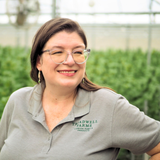
Jammie Treadwell has co-owned and operated Treadwell Farms since 2019 handling everything from nursery operations to product development. Treadwell and her parents continue her family's Florida farming legacy by intentionally creating natural, small-batch artisanal hemp products trusted and tested with the community in mind.